


Lithium batteries and lithium-ion batteries: dangers
Lithium batteries and lithium-ion rechargeable batteries are used almost everywhere where wireless electrical energy is required. The storage and disposal of these lithium-containing energy sources is particularly hazardous. Although many horror stories about exploding laptops and burning mobile phones are exaggerated, lithium-ion batteries can certainly pose a danger to people and the environment.
- Lithium is a light metal of a complex nature, which has a number of inherent risk factors.
- It is extremely important to adhere to strict guidelines when storing, charging and disposing of lithium batteries. Some of these guidelines are even enshrined in law.
- The rising sales and usage figures for lithium-ion batteries are accompanied by an increase in waste volumes. The appropriate handling of batteries and rechargeable batteries will therefore remain essential for the safety of people and the environment in the future.
Lithium-containing energy sources are ubiquitous
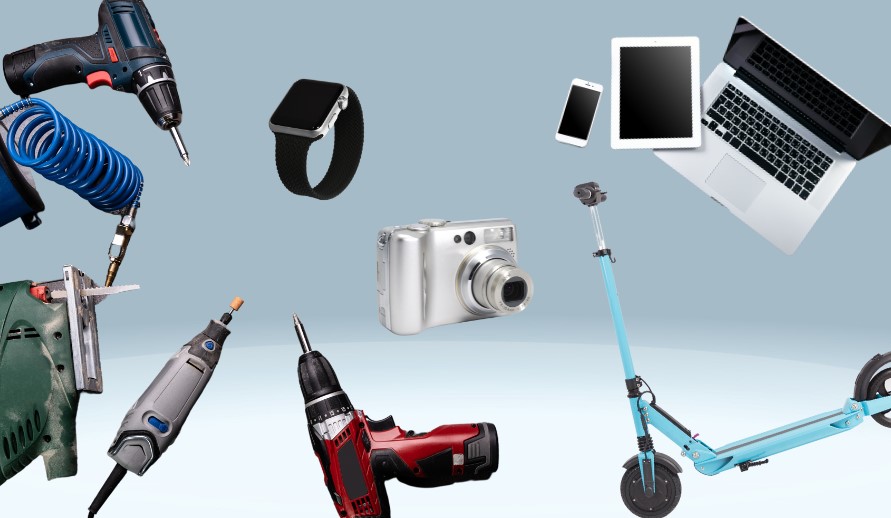
They are present in smartphones, laptops and tablets, but also in a variety of household, craft and gardening tools such as hoovers, drills and lawnmowers. They can be found in remote controls, hearing aids and toys: lithium batteries and lithium-ion rechargeable batteries are an integral part of our everyday lives. They also play a crucial role in the growing field of electromobility. Electric cars, e-bikes, e-scooters, hoverboards and pedelecs - most of these means of transport rely on lithium-ion batteries.
Wherever wireless energy is required, lithium products are now in use. There are good reasons for this. Batteries and rechargeable batteries with lithium offer a high energy density, generally show no so-called memory effect and are characterised by a minimal self-discharge rate compared to other battery types (under normal room temperatures).
The advantages are obvious. Nevertheless, the handling of lithium batteries and lithium-ion rechargeable batteries poses risks, both during storage and when disposing of defective or obsolete products.
Properties of lithium and lithium-ion batteries
Lithium is a silver-white alkali metal and a light metal and is extremely reactive. Even brief contact of lithium with the skin, especially skin moisture, can lead to burns and chemical burns. In addition, lithium compounds that form lithium ions in aqueous solutions can be harmful to health.
Although lithium is almost exclusively chemically bound and therefore does not burn itself, special care must be taken when handling lithium batteries and lithium-ion rechargeable batteries:
- Lithium-ion batteries are a fire hazard. Improper handling of lithium batteries/rechargeable batteries due to overcharging, damage or overheating can lead to the uncontrolled release of energy (‘thermal runaway’) as a result of chemical processes. This causes the lithium-ion cells to heat up dynamically, possibly up to 1,000 degrees Celsius, which can trigger a chain reaction leading to an explosion.
- Lithium-ion batteries are explosive. Although it is rare, lithium batteries can explode without external heat. Reasons for this can be incorrect installation (e.g. too little space in the housing), defective batteries (due to physical impact), overheating or charging too quickly or incorrectly.
- Toxic gases can be produced. In the event of a fire, the smoke gases produced can cause acute irritation, shortness of breath and severe coughing or lead to smoke poisoning if inhaled. Eye protection is also strongly recommended.
Please note in general: When handled properly, batteries and accumulators containing lithium pose a low risk. Nevertheless, it is obvious that appropriate safety precautions must be taken both in private households and in commercial areas. Damaged lithium-ion batteries in particular can quickly become a real danger.
Storing, charging and disposing of lithium batteries and lithium-ion rechargeable batteries correctly
Lithium-containing batteries and rechargeable batteries are now available in a wide range of types. The former are available in various forms such as cylindrical AA sizes, block batteries or button cells. Lithium-ion rechargeable batteries are also often manufactured in specific shapes that are customised for the respective device. These are customised. In most cases, batteries and rechargeable batteries with lithium content are labelled with the voluntary marking "Li" or "Li-Ion".
Regardless of the variety of types, there are practical recommendations for storage, charging and disposal:
Storage of lithium batteries and rechargeable batteries
It is essential to note that any direct and intensive mechanical and thermal impact should be avoided when storing lithium batteries and lithium-ion rechargeable batteries. The following points must be observed:
- Die Batterien und Akkus (oder die Geräte, in denen sie eingebaut sind) sollten so gelagert werden, dass sie vor Erschütterungen, Schlägen, Druckbelastung, Stürzen usw. geschützt sind.
- Es ist ratsam, Batterien und Akkus nicht in Außenbereichen, feuchten Räumen oder an Orten mit zu erwartenden hohen Temperaturen zu lagern. Beispielsweise sollten Pedelecs oder E-Scooter nicht über längere Zeiträume intensiver Sonneneinstrahlung ausgesetzt sein. Selbst, wenn es zu keiner Entzündung durch Hitze kommt, können hohe Temperaturen die Lebensdauer der Akkus stark beeinträchtigen. Gleiches gilt für Minustemperaturen. Als Orientierung dienen hierbei Temperaturen von -20°C bis +50°C als Belastungsgrenzen.
Der optimale Temperaturbereich für die Lagerung von Batterien und Akkus liegt zwischen 10°C und 25°C. - Bei der Aufbewahrung von Akkus ist es wichtig sicherzustellen, dass sie weder komplett entladen noch über lange Zeit ans Stromnetz angeschlossen sind.
- Es ist empfehlenswert, Akkus, die längere Zeit nicht verwendet werden, in Räumen mit Rauchmeldern (bei einer Kapazität von 30 bis 60 Prozent) oder in speziell dafür vorgesehenen feuerfesten Behältern aufzubewahren.
Charging lithium-ion batteries
The following points should be observed when charging lithium-ion batteries or during the charging process of the associated devices:
- Only use chargers and charging cables that are specifically designed for the battery in question. The built-in battery management systems in conjunction with the corresponding charger protect against overcharging, thereby maximising the service life of the battery.
- Ensure that there are no flammable materials in the immediate vicinity of the charging process.
- Always monitor the charging process or, if possible, carry it out in a room with an installed fire/smoke detector.
- Avoid both fully discharging and fully charging the battery. Both have a negative effect on the service life and performance of many battery types. It is advisable to charge the battery early and only charge it to a maximum of 90 per cent of its capacity.
- Disconnect the charger from the mains and the battery after charging. If the charger remains connected, it could be damaged due to the continuous release of energy and heat.
- For devices that are operated with both a rechargeable battery and a mains adapter, remove the rechargeable battery if the device is operated from the mains. Continuous mains operation with the battery inserted in the device can shorten the service life of the battery.
Disposal of lithium batteries and rechargeable batteries
The service life of lithium-ion batteries varies on average between two and five years, depending on the type. If damage occurs due to ageing or other factors, this often manifests itself in the following signs:
- Rapid and frequent heating during the charging process
- Heating of the battery or rechargeable battery even when switched off
- Leakage of the battery or rechargeable battery
- Damaged or deformed housing, e.g. melting points on the plastic housing or swelling
- Tarnishing on the metal parts of the battery
When disposing of lithium batteries and lithium-ion rechargeable batteries, please note that they must never be disposed of with household waste. Due to the known dangers associated with lithium batteries and lithium-ion rechargeable batteries, there is a legal obligation to dispose of these batteries and rechargeable batteries at specially designated collection points. These collection points can be recycling centres and shops that sell lithium-ion batteries and rechargeable batteries. These are obliged to take back batteries free of charge in accordance with the Battery Act. This regulation applies to all used batteries and rechargeable batteries, including button cells.
Used larger lithium-ion batteries, such as those used in e-bikes or e-scooters, are classed as industrial batteries. The distributors or sellers of these batteries are also obliged to take them back free of charge. Some selected, qualified municipal collection centres accept not only conventional portable batteries, but also industrial batteries. However, before handing them in, please check whether the selected collection centre is actually responsible for taking back this type of battery.
Wherever possible, batteries or rechargeable batteries should be removed from electronic devices before disposal. However, this removal should be done with appropriate care.
It is generally advisable to insulate the terminals of the separated battery with adhesive tape to prevent external short circuits and thus the risk of fire.
It is also important to note that deformed or leaking batteries and rechargeable batteries:
- should never be reused or opened, as this can lead to spontaneous combustion and explosion,
- should not come into direct contact with the skin, as escaping toxins can cause chemical burns and burns,
- should be handed over to the specialised personnel at the dispensing points to ensure that they are handled properly.
This is particularly relevant for high-energy rechargeable batteries or industrial batteries with a higher lithium content. Customised boxes are a recommended option for the storage, transport and proper disposal of such batteries. The market offers container systems that are customised to meet the specific safety and transport requirements of everything from conventional to high-energy batteries.
Recycling lithium-ion batteries
In view of the complex properties of lithium and its applications, the Federal Environment Agency stated: ‘Batteries and accumulators containing lithium are of great importance for people and the environment due to their potential hazards, the complex composition of the materials they contain, which are often extracted at great expense, as well as the rapidly increasing sales and utilisation rate and the resulting quantities of waste.’
In an era of increasing demand for lithium batteries and rechargeable batteries, the recovery of the valuable materials contained in these batteries and rechargeable batteries is of enormous importance in addition to the safety aspects.
Old batteries can contain valuable metals such as nickel, cobalt, lithium, manganese, copper, iron, aluminium and even silver. These can be reused as secondary raw materials. This fact has become even more important in the context of initiatives such as the Green Deal and the concept of the circular economy.
Recently, the ‘strategic importance of recycling lithium-ion batteries’ (Institut für angewandte Ökologie Freiburg) was emphasised. This ranges from the recovery of key materials in high purity to the development of a value chain for more powerful lithium-ion cells and batteries and the improvement of the environmental balance. At the same time, critical voices are focussing on the development of alternatives to lithium-containing energy sources (such as solid-state batteries). How the final "race for the battery of the future" (Spiegel) will turn out remains to be seen, but comprehensive recycling, consumer participation and the growing role of waste management will undoubtedly play a role.